



Blog
Texas Right to Repair Law 2026

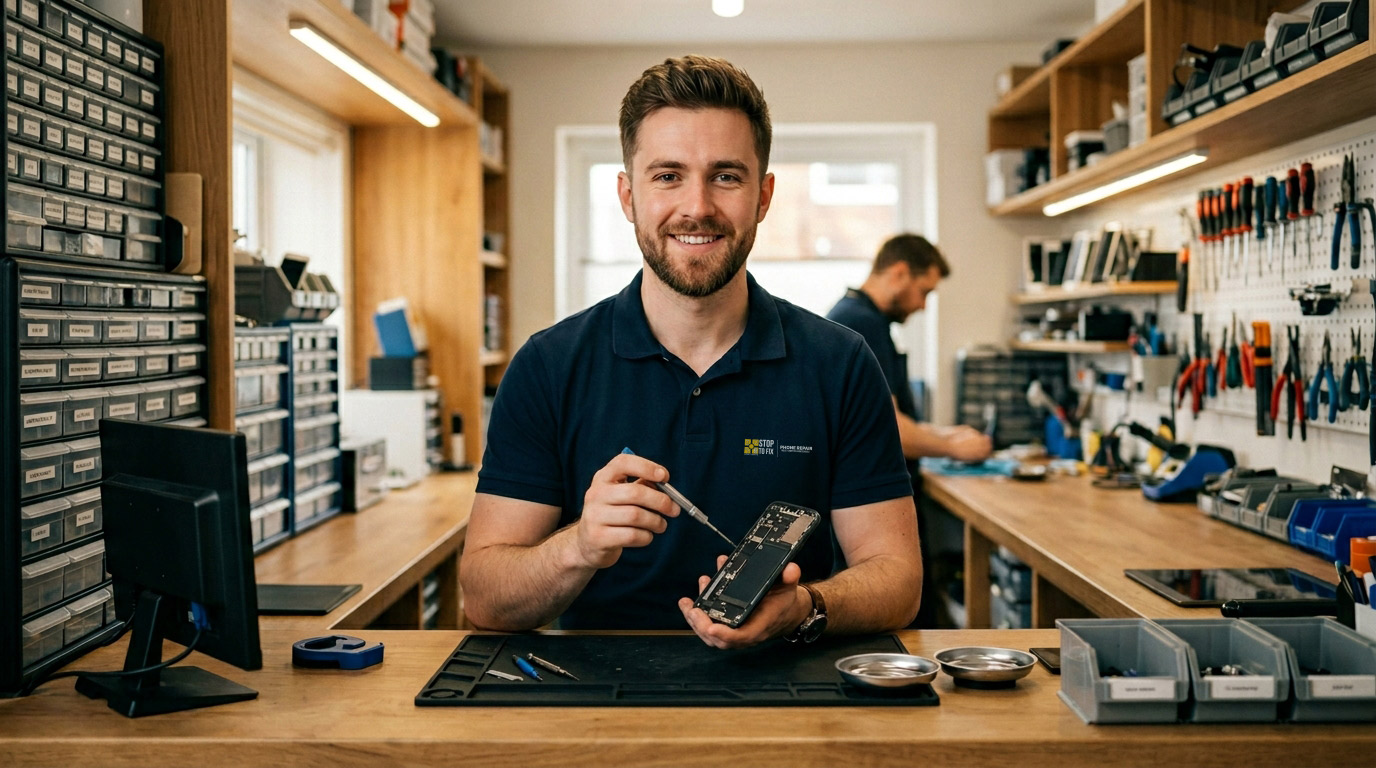
Something significant happened for Texas (Texas Right to Repair Law 2026) consumers on June 20, 2025 and its effects are being felt right now.
Governor Greg Abbott signed HB 2963 into law, making Texas the eighth U.S. state to pass a right to repair law for consumer electronics and the first Republican-led state to do so. The law takes effect September 1, 2026, and it directly changes the rules around phone and device repair for every resident of San Antonio.
Here’s what the law actually says, what it means for you practically, and why it matters.
What Is the Texas Right to Repair Law?
The Texas Right to Repair Act (HB 2963) requires manufacturers of consumer electronics to make repair parts, tools, and documentation available to both individual consumers and independent repair shops — on fair and reasonable terms.
In plain language: manufacturers can no longer lock repair access exclusively to their own stores and authorized service centers. If you own a phone, tablet, or laptop, the company that made it must now give qualified repair technicians what they need to fix it properly.
The law passed with remarkable bipartisan consensus: the Texas House passed it 126–0 and the Texas Senate voted 31–0 — a unanimous mandate that crossed every political line.
What the Law Covers
The law covers laptops, smartphones, tablets and other electronics, but excludes medical devices, farm equipment, large industrial equipment, motor vehicles and video game consoles.
For documentation requirements: for products costing between $50 and $99.99, manufacturers must provide documentation for at least three years. For products costing more than $100, manufacturers must provide repair documentation for at least seven years after the product model is first put on the market.
That means your iPhone, your Samsung Galaxy, your MacBook, your iPad all covered. The law applies to any device sold in Texas priced over $50.
What It Means for You as a San Antonio Consumer
1. Independent repair shops can now access manufacturer parts and documentation
Before this law, Apple and Samsung tightly controlled which shops could access genuine replacement parts and official repair guides. Authorized service providers typically Apple Stores and Samsung-certified partners — had a significant advantage over independent shops.
Under HB 2963, manufacturers must provide independent repair businesses with the same parts, tools, and technical documentation they provide their authorized networks, at fair prices. This levels the playing field and gives independent shops in San Antonio the official resources to do the best possible work.
2. More competition means better pricing and faster service for you
When only authorized repair centers have access to genuine parts and documentation, they control the price. Independent shops competing on equal footing creates market pressure — which translates to more competitive repair pricing and more service options across the city.
For San Antonio residents, that means more shops capable of doing quality repairs at reasonable prices, without having to drive to an Apple Store or wait weeks for a mail-in repair.
3. Your warranty rights are stronger than ever
This is one of the most important and most misunderstood aspects of the right to repair movement. Under the federal Magnuson-Moss Warranty Act, a manufacturer cannot void your warranty just because you used a third-party battery or had your screen fixed at a local shop. The burden is on them to prove that the specific repair or part used directly caused the new problem.
HB 2963 reinforces this at the state level. Getting your phone repaired at Stop to Fix does not automatically void your manufacturer warranty and under Texas law, manufacturers face increasing legal exposure if they deny warranty claims without demonstrating that an independent repair caused the specific issue in question.
4. Longer parts availability for older devices
One of the most practical benefits of HB 2963 is the documentation and parts availability timeline. Manufacturers must provide repair resources for seven years on devices over $100. That means your iPhone 14 or Samsung Galaxy S23 devices already a few years old must have parts and documentation available until at least 2030 or beyond.
This directly supports repairability over time. A phone that can still be repaired five years from now is a phone that doesn’t need to be replaced.
What the Law Does NOT Do
It’s worth being honest about what HB 2963 doesn’t change because some limitations matter.
Parts pairing is still allowed. This law does not prohibit parts pairing the use of software to identify parts. If a manufacturer uses parts pairing technology and a customer has a repair done using third-party parts, they are likely to get product performance or warranty warning messages.
Parts pairing is Apple’s and Samsung’s practice of software-linking components to specific devices meaning a replacement screen or battery may trigger a notification on the phone saying it’s not a genuine part, even if it functions identically. HB 2963 doesn’t ban this practice.
Colorado’s right to repair law goes further and does restrict parts pairing — Texas’s does not. Consumer Reports has called on the Texas legislature to revisit this in the next session.
Trade secrets are protected. The law doesn’t require manufacturers to disclose proprietary software or security information that constitutes a legitimate trade secret. There are reasonable limits to what must be shared.
Video game consoles are excluded. Nintendo Switch, PlayStation 5, Xbox — these fall outside HB 2963’s scope. This is a notable gap for repair shops that handle gaming hardware.
Why This Matters Beyond Pricing
The right to repair movement has always been about more than cost it’s about ownership. Texas produces some 621,000 tons of electronic waste per year, which creates an expensive and toxic mess. When repair is difficult or expensive, devices get thrown away rather than fixed adding to landfills and driving the demand for new manufacturing.
U.S. PIRG estimates that households can save hundreds of dollars per year by repairing common electronics like phones, laptops, and appliances instead of replacing them.
A law that makes repair more accessible doesn’t just help individual wallets it reduces waste at scale. That’s a win for San Antonio and for Texas broadly.
What Stop to Fix Has Always Done and What Changes Now
Stop to Fix has operated as an independent repair shop in San Antonio since our founding. We’ve always believed that you should be able to get your device repaired by a trusted local business without being forced into expensive manufacturer channels.
HB 2963 validates that belief at the state law level.
What this means practically for our customers:
- Greater access to quality parts: As manufacturers comply with the law and open their parts networks, independent shops like Stop to Fix gain access to a broader range of genuine components — improving the quality of repairs across the board.
- Stronger legal standing for your warranty: If a manufacturer ever tells you that using an independent shop voided your warranty, Texas law — and federal law — gives you recourse. Ask us about your specific situation and we can help you understand your rights.
- Long-term repairability: The seven-year documentation requirement means devices you buy today have a longer serviceable life — and we’ll be here to service them.
We’ve been your neighbors in San Antonio’s Bandera Road and Pleasanton communities. The Texas Right to Repair Act makes it official: getting your device repaired locally, by people you trust, is not just practical it’s your legal right.
Quick Recap
- Texas Governor Abbott signed HB 2963 on June 20, 2025 — effective September 1, 2026
- Law covers phones, tablets, laptops priced over $50 — excludes game consoles, medical devices, vehicles
- Manufacturers must provide parts, tools, and documentation to independent shops on fair terms
- 7-year documentation requirement for devices over $100 means longer repairability
- Parts pairing is still allowed — a limitation consumer advocates want addressed in future sessions
- Your warranty cannot be voided simply for using an independent repair shop — federal law already protected this, Texas law reinforces it
- U.S. PIRG estimates households can save hundreds of dollars per year by repairing electronics instead of replacing them
Stop to Fix — Local Device Repair in San Antonio
📍 Bandera Road: Santikos Silverado Shopping Center, 11851 Bandera Rd., Suite 104, San Antonio, TX 78023
📍 Pleasanton: 1320 W Oaklawn Suite D, Pleasanton, TX 78064
📞 Bandera: (210) 325-9913
📞 Pleasanton: (210) 371-8328
🌐 stoptofix.com/get-instant-estimate